Cedar Shingles pt. 1
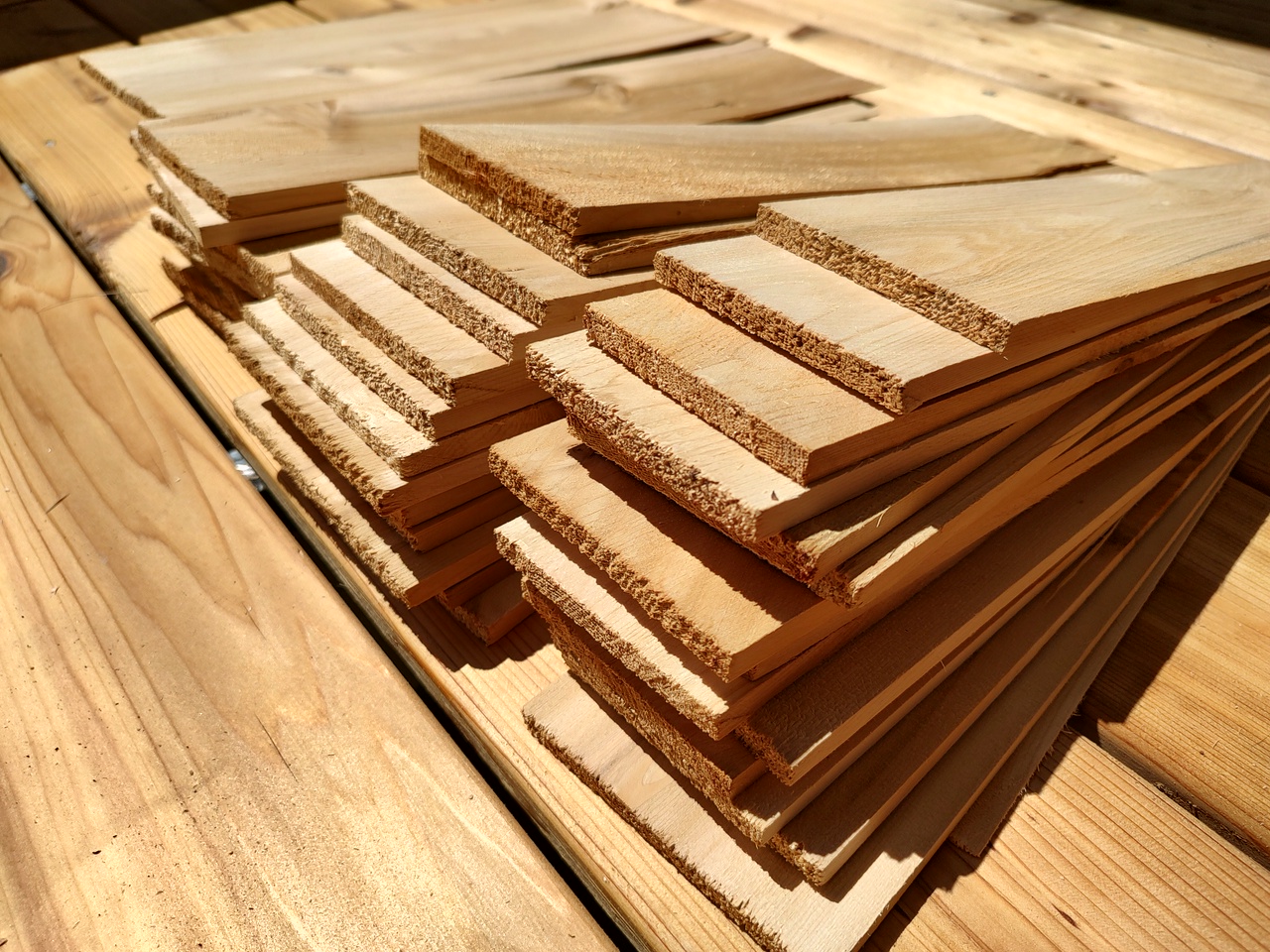
This article is part of a series about shingling a gable wall. The first part covers running strait courses from the bottom up. In the future, I will cover initial layout, which is not provided in this article.
The shingles I am using in this article are locally known as “shim stock,” a.k.a. the lowest grade of eastern white cedar. Without getting into the weeds regarding how suppliers esoterically classify wood products, suffice it to say that they are charmingly rough and not in the least bit square. But, with somewhat careful installation and the acceptance of a varied look (or even a penchant for it), they can look quite handsome.
Leaving shingles unfinished is a traditional method of siding epecially in New England. In time and depending on exposure to local elements, the shingles will acquire various levels of weathering. I adore aged wood and enjoy watching the process through the years. The result is an effect that cannot be replicated.
Unpack bundles and make loose piles of sizes. The general sizes this style of shingle (lowest grade) comes in are S, M, and L. Use a container for easy transport and sorting.
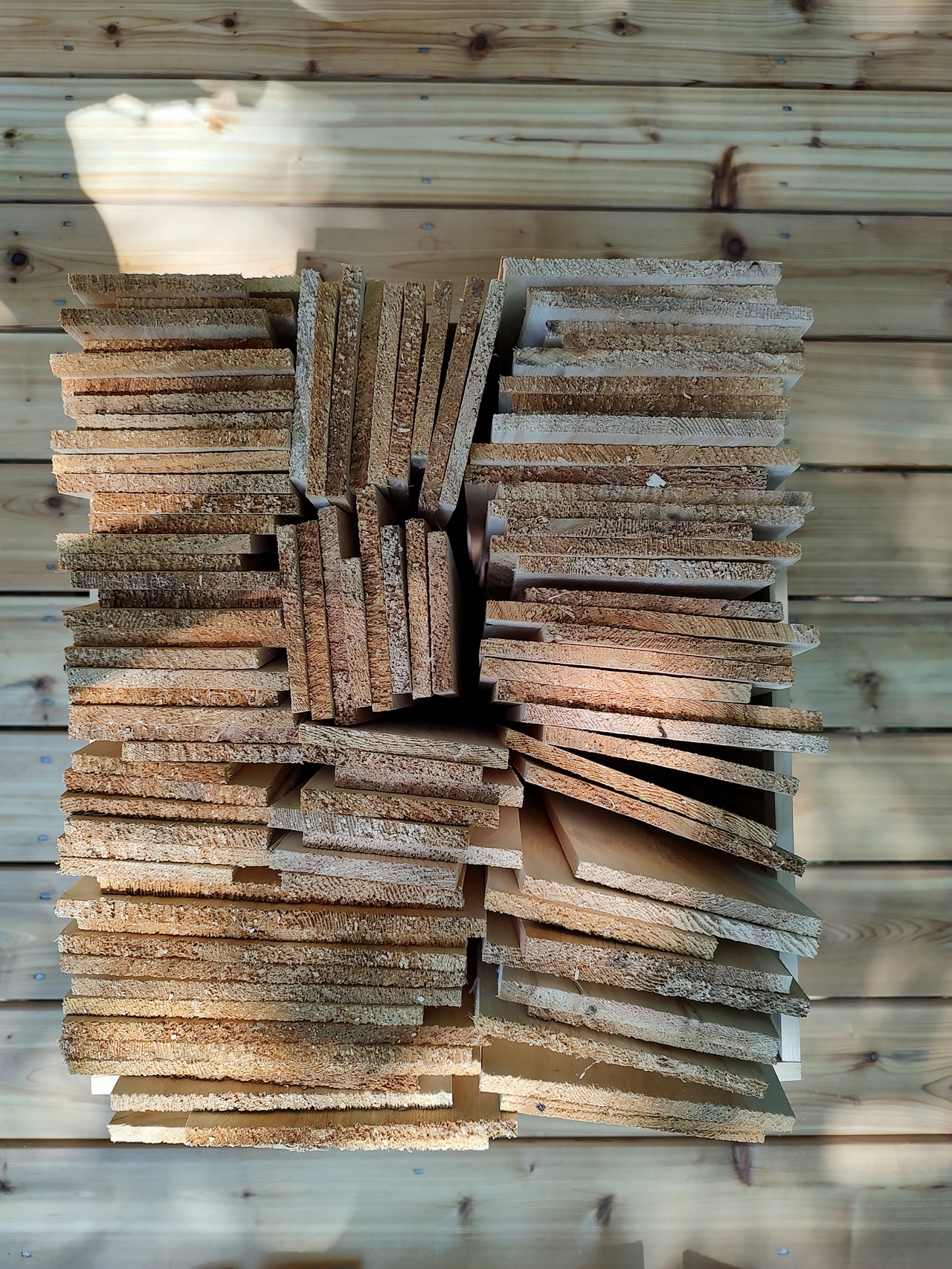
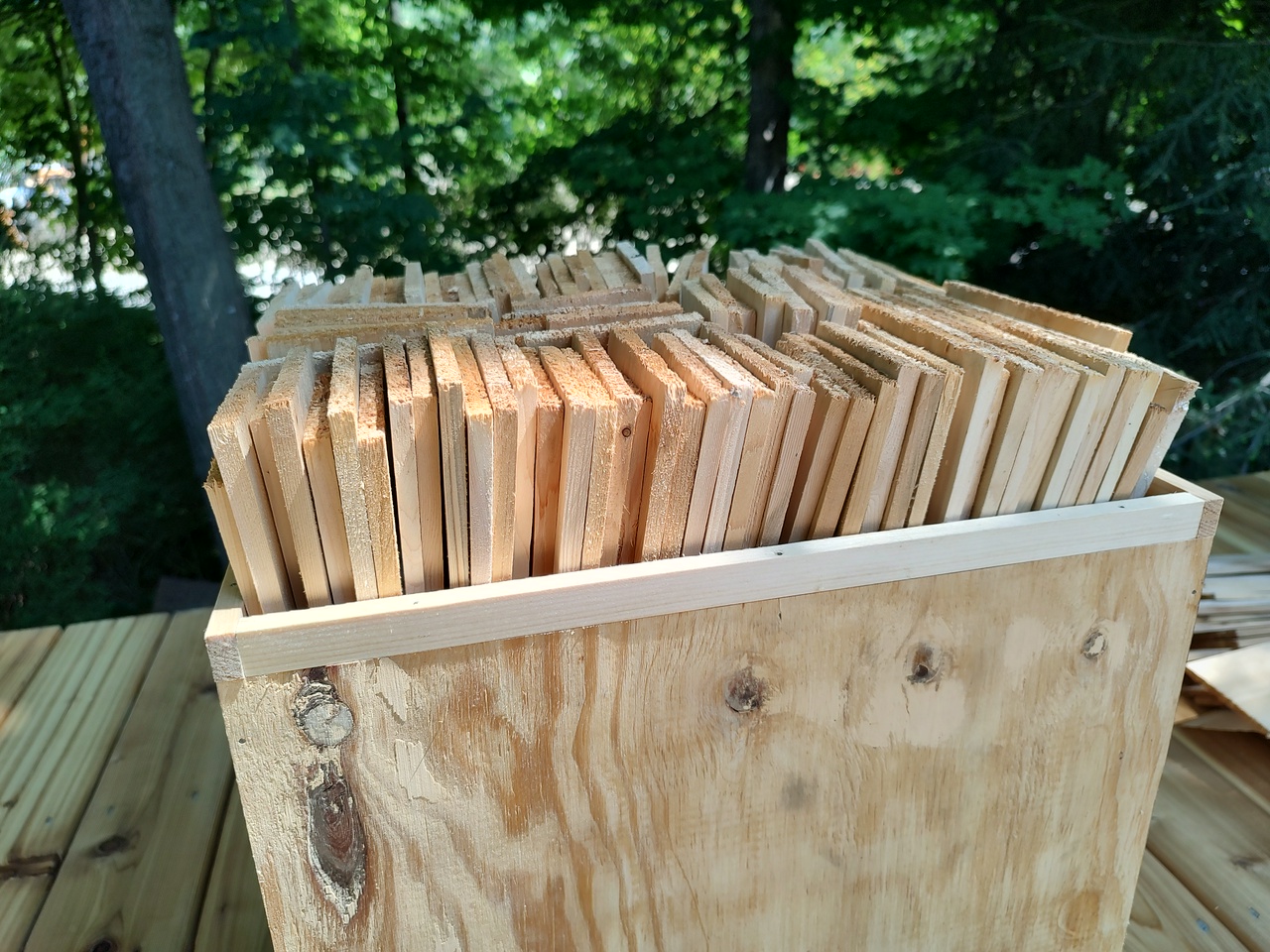
The proportion of size quantities for these shingles is roughly 5/3/1, S-L. So, when coursing, layout of the grab pile is set accordingly so material use is even.
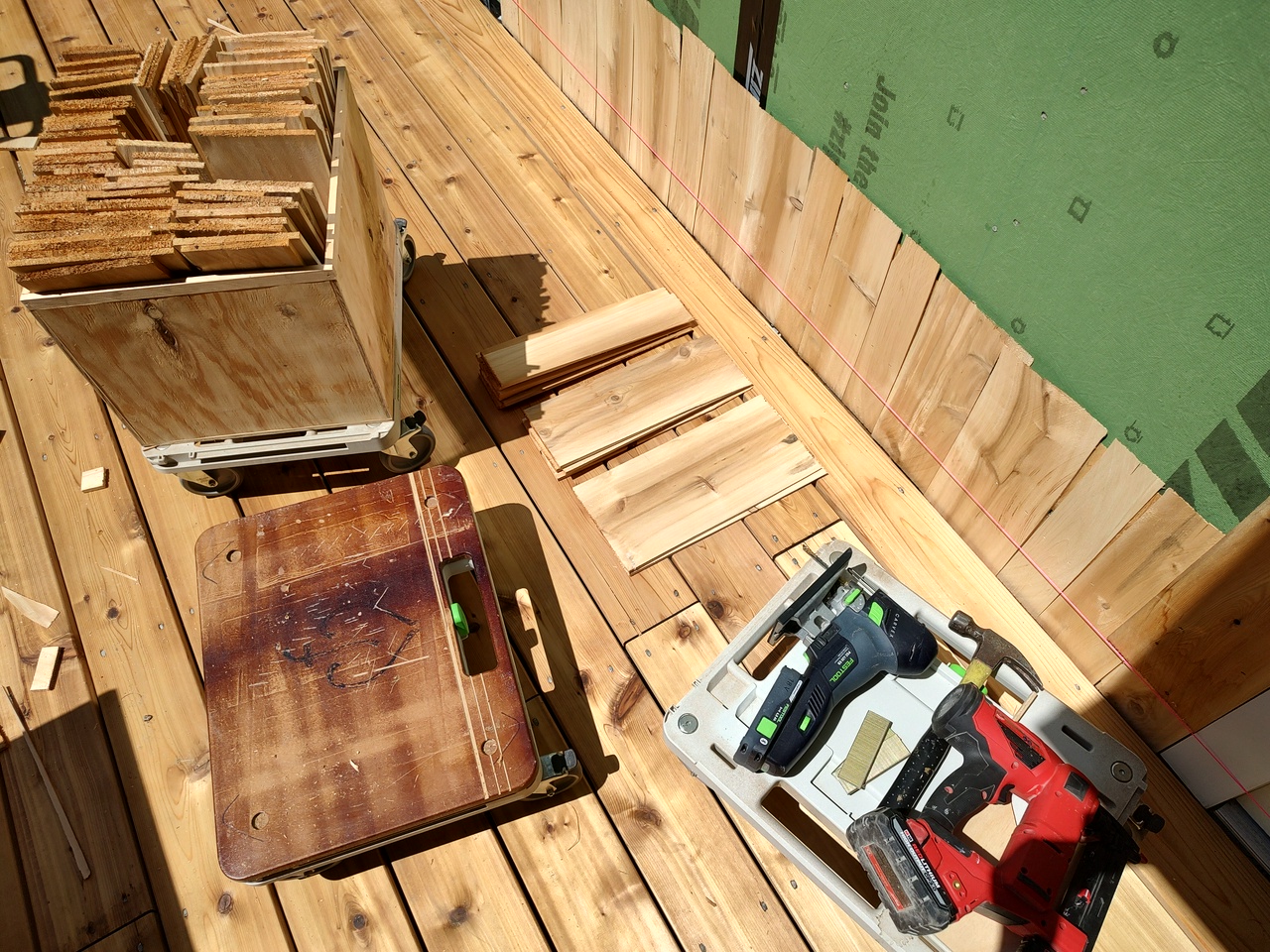
When running a course, use shingles with respect to proportion available. Ensure overlap with course below is >1”. Follow a control line.
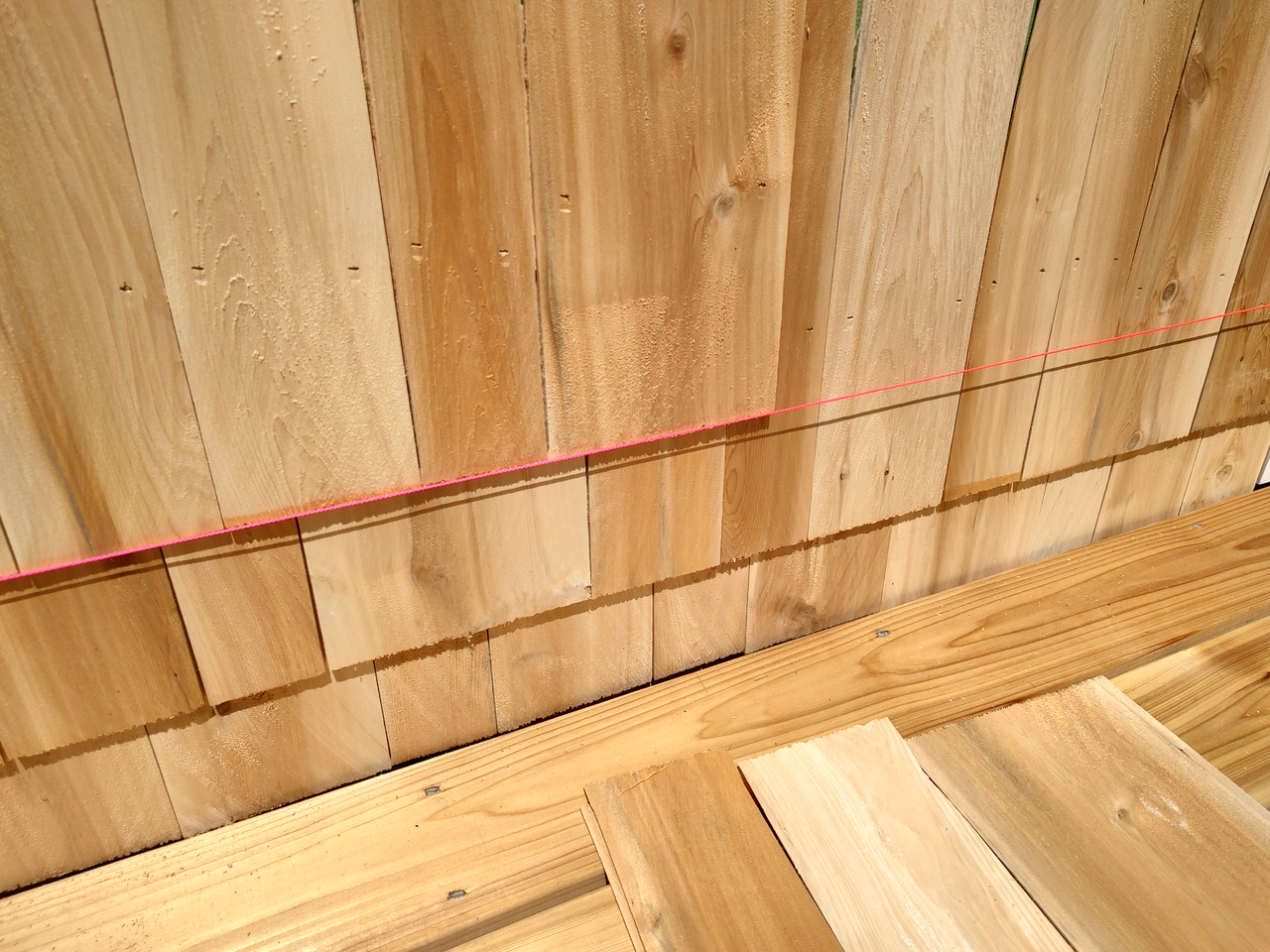
When reaching a termination, it is easy to sort through the container and select sizes to fit. Ihave found that it is almost always possible to end without cutting.
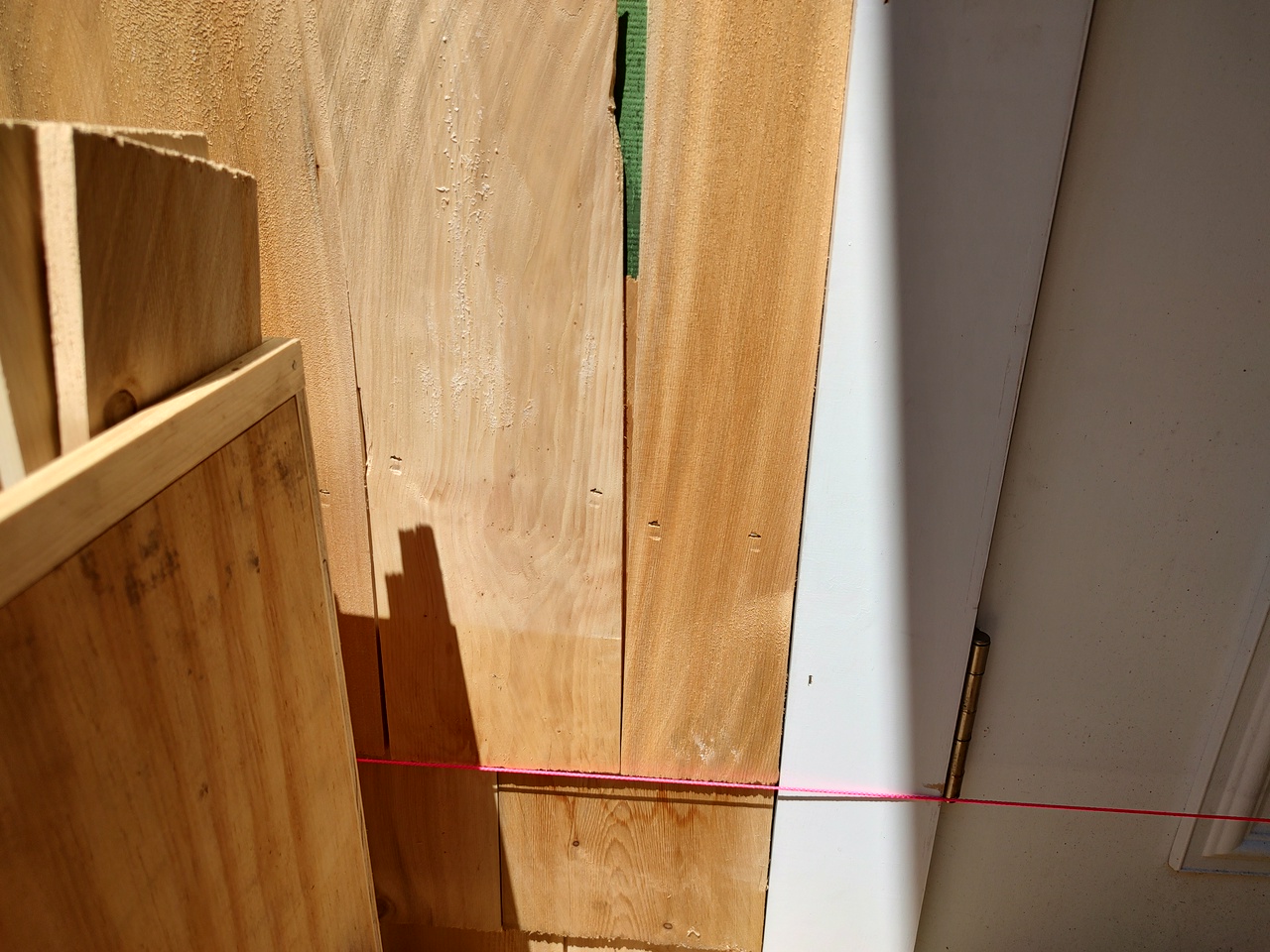
With practice and good (enough) sorting techniques, cognitive load can be reduced and, with reliance on quickly assessing available sizes, efficiency makes swift work.
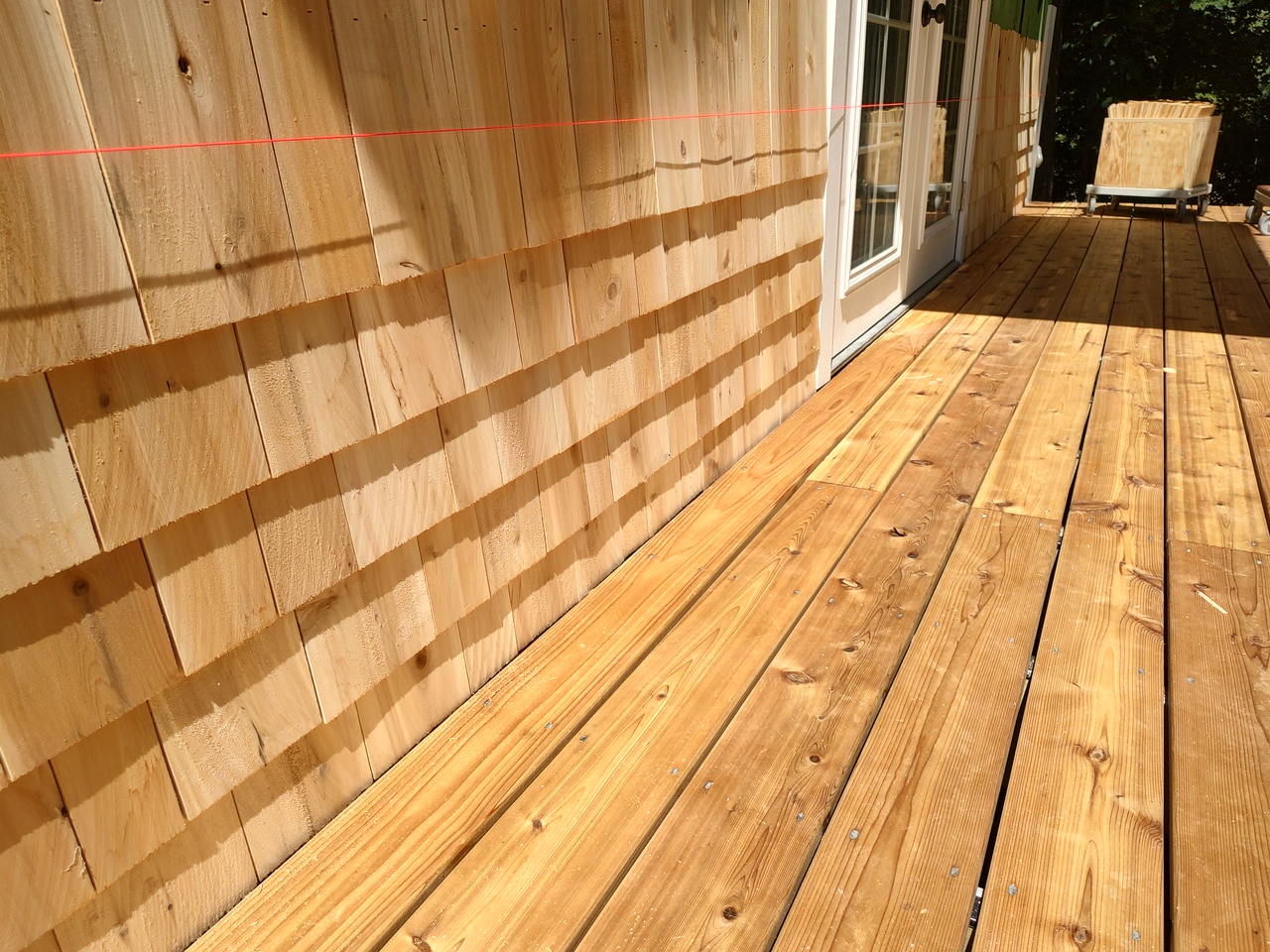
The next part of the series will describe a method of using the shingles to create effects around openings such as windows and doors